
The Reproductive Health Care and Advocacy Fellowship is a year-long intensive clinical training program that develops a diverse community of family medicine leaders to provide, teach, and advocate for access to equitable and person-centered reproductive health care, especially within primary care. We envision a vibrant and diverse community of clinical leaders and change-makers with the power to provide and create access to equitable and person-centered reproductive health care in the United States.
- Overview
- About the Fellowship
- Important Dates
- Application Requirements
- Fellowship Criteria
- FAQ
- Site Information
Four out of five people in the United States receive their health care from primary care providers. Yet, fewer than 6% of family medicine residency programs provide training in abortion and comprehensive management of early pregnancy loss. Our fellowship program helps fill this training gap.
Launched in 2007, the fellowship program has trained 72 family physicians who are practicing, teaching, and creating change across the country. Fellows are chosen because of their commitment to providing abortion care in an abortion provider shortage area, developing new abortion training programs, and speaking openly about being an abortion provider. Fellows spend one year as a “trainer in training,” learning to perform abortion and procedures related to contraception and early pregnancy loss care, and learning to teach these procedures to others. Fellows also participate in a variety of leadership development and advocacy training activities throughout their fellowship year, with a particular focus on integrating a reproductive and racial justice lens into their work as physician-advocates and leaders.
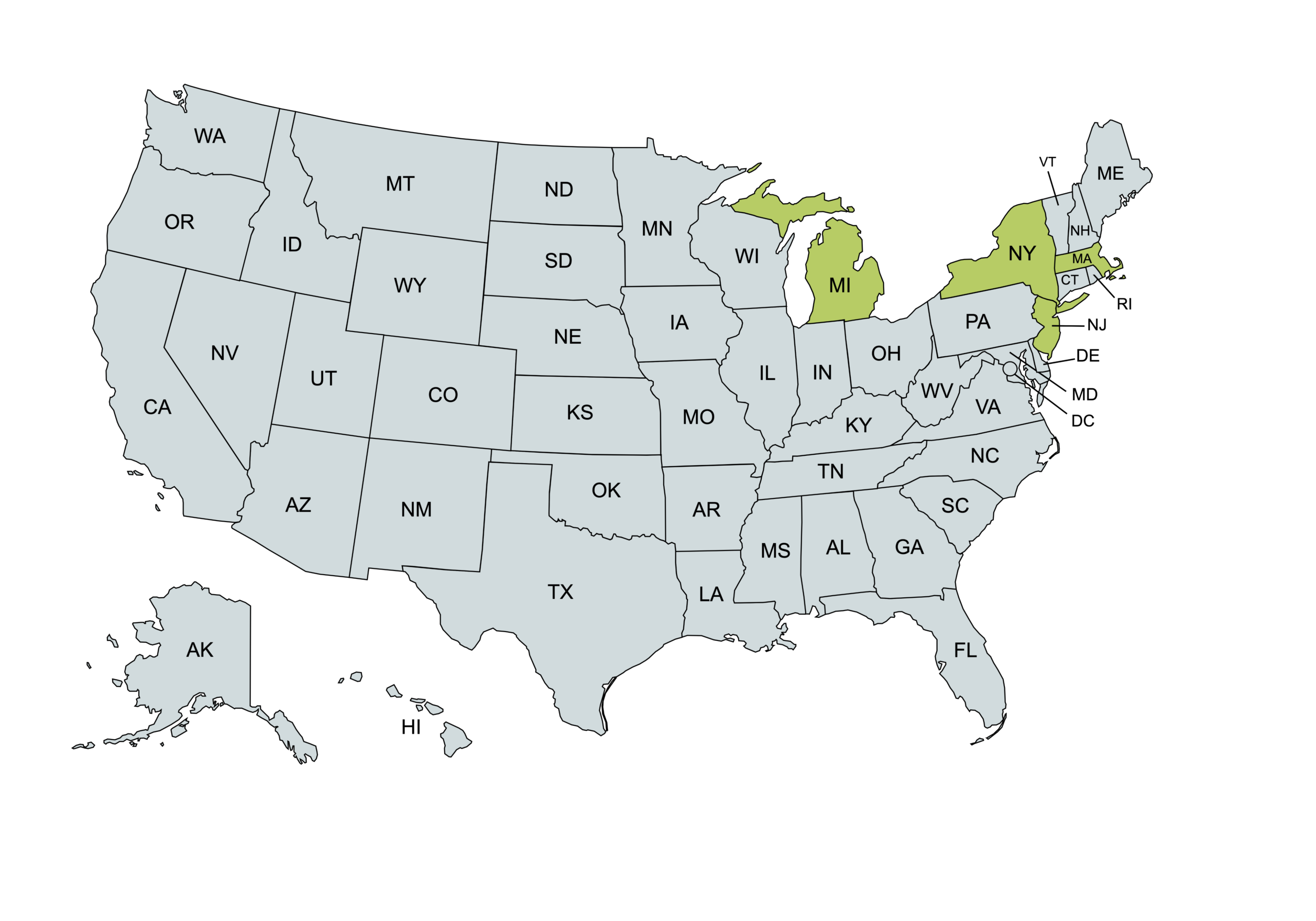
We started out training just one fellow per year. With donations from grassroots supporters and a grant from the Horace W. Goldsmith Foundation, we have increased the number of fellows we train to 8 per year at sites in Massachusetts, Michigan, New Jersey, and New York state.
This one-year fellowship aims to develop a diverse community of family medicine leaders who will provide, teach, and advocate for equitable, person-centered reproductive health care, especially within primary care. Fellowship positions are available in the following locations (registration required to access site information):
During our one-year fellowship, fellows will develop skills in:
Clinical Care and Service Implementation
- Fellows will spend one year as a “trainer-in-training,” learning to perform reproductive health procedures, including abortion.
- Fellows will spend ~20 days at a high-volume abortion site.
- Fellows will work at a family medicine or community-based clinic site, seeing primary care patients.
Teaching
- Fellows will develop teaching skills by precepting residents, giving presentations during residency didactic sessions, and providing reproductive health training opportunities for medical students and other learners.
- Fellows will learn how to teach reproductive health procedures to others and become abortion trainers.
- Fellows will work on academic projects with the goal of presenting at academic meetings and/or writing for publication.
Advocacy & Leadership
- Fellows will develop advocacy and leadership skills through participation in the Reproductive Health Access Network, involvement in the American Academy of Family Physicians, and partnerships with reproductive health, rights, and justice organizations and coalitions.
- Fellows will participate in an institutional advocacy project to promote equitable access to reproductive health care at their fellowship site.
- (Optional) Fellows may apply to the Physicians for Reproductive Health’s Leadership Training Academy and participate if accepted.
Purposeful Inclusion
- Fellows will participate in virtual didactic sessions on integrating an anti-racist and reproductive justice lens into providing, teaching, and advocating for reproductive health care.
- Fellows will develop strategies to support a lifelong commitment to integrating an anti-racist lens into providing, teaching, and advocating for reproductive health care.
Community & Mentorship
- Fellows will engage in career development and networking opportunities, including participating in national and regional reproductive health and family medicine conferences.
Applications will open in May 1, 2026. Applications will be accepted until August 31, 2026.
Once applications are closed, we will begin reviewing all submitted applications. Requests for interviews will be sent out to selected candidates in late September. Interviews will take place in October and November. Final decisions will be sent out in mid-December.
Application Opening: May 1, 2026
Application Deadline: August 31, 2026
To apply, please submit the following items:
- Fellowship Application Form
- Short Essay Question Responses (max 500 words each)
- Curriculum vitae (CV)
- Three Letters of Recommendation
Short Essays (max 500 words each)
- Tell us why you are interested in the RHAP Fellowship. How do you plan to use Fellowship training to enhance access to sexual and reproductive health care? Please tell us about your career goals, commitment, and desires for providing abortion and primary care post-fellowship.
- The RHAP Fellowship is committed to practicing and teaching anti-racism and reproductive justice (and other forms of social justice). We aim to train fellows to develop these skills to better care for their patients, mentor learners, and dismantle systems of oppression and harm within their institutions and communities. Tell us about your experiences or interests in social/reproductive justice, as well as your goals and commitment to social/reproductive justice and anti-racism in medicine as a clinician, teacher, and advocate.
- Tell us about your experiences and interests in advocacy. How would you like to use the Fellowship to further your advocacy and leadership goals as a family physician working to enhance access to sexual and reproductive health care?
Letters of Recommendation
- Please provide three letters of recommendation. Letters must be on electronic letterhead with an electronic signature or a scanned PDF of the letter on letterhead with a signature. You can obtain letters of recommendation from individuals who are mentors, professors, advisors, or supervisors in any capacity in medicine/health care, not necessarily specialized or focused on reproductive health. 1 of the 3 letters may be written by a colleague (i.e., co-resident) or someone you mentor. If this individual does not have an institutional affiliation, an electronic letterhead for this letter is not necessary.
- The following are topics we would like to see in letters of recommendation. One letter does not need to cover all of these topics. Topics include your skills, dedication to, practice, and values around:
- Patient-centered care and family medicine
- Mentoring and teaching learners
- Advocacy and activism
- Social justice and health equity, including reproductive and racial justice
- Procedural skills
- Approach to learning
- Commitment to reproductive health, rights, and justice.
- Recommendations should be emailed directly by the writer to fellowship@reproductiveaccess.org.
Applicants must be board-certified or board-eligible family physicians who will have completed residency training in the United States by July 1, 2027. Candidates should have the required state licenses before the fellowship start date. Recent graduates and mid-career family physicians are eligible. Candidates need not be fully trained in reproductive health procedures.
RHAP seeks to train a diverse community of leaders. We will review your application based on the following areas:
- Quality of your application
- Commitment to primary care promotion of sexual and reproductive health care, including abortion
- Commitment to practice in low-resourced/low-access settings
- Commitment to diversity, equity, and justice
- Potential for leadership, teaching, and advocacy
Do you accept applicants with no experience or a lot of experience?
- We accept applicants with previous experience as well as those without any.
- We do not require applicants to have prior procedural abortion training. We have and do accept people with nearly no procedural training experience. In our application review, we consider your experiences and efforts in trying to seek abortion training opportunities.
- We understand that it is not possible for all people interested in this Fellowship to have abortion training exposure.
- To strengthen your skills and application, we encourage applicants to pursue other gynecological, obstetrical, and procedural training experiences, such as miscarriage management, pap smears, IUD insertion/removal, etc.
Where can I find more information about each fellowship site?
- Visit our Fellowship Site-Specific Information page to learn more about each site. For security reasons, you will have to register an account in order to view this page.
What elective opportunities are available at each site?
- Visit our Fellowship Site-Specific Information page to learn about elective opportunities at each site. For security reasons, you will have to register an account in order to view this page.
Is the fellowship open to those outside of family medicine? What about advanced practice clinicians?
- Unfortunately, since our programs are housed within family medicine programs, the RHAP Fellowship is only open to board-certified or board-eligible family physicians by July 1st of the year they start the Fellowship.
- There are a few other resources for training and advocacy you can look into. If you haven’t already joined the Network, the Reproductive Health and Advocacy Network is an excellent place to connect with like-minded clinicians in your community for training and advocacy opportunities. There is also the Repro TLC, NAF’s Regional Training Centers, and the Kansas Clinical Family Planning (KCFP) Fellowship that offer abortion training rotations to clinicians of various specialties and experience levels.
Can those outside of the United States apply for the fellowship?
- Current requirements for our fellowship include that applicants must be board-certified or board-eligible family physicians who will have completed residency training in the United States by July 1st of the year they would start the fellowship.
Can you accommodate visa sponsorship?
- Unfortunately, not all sites can accommodate visa sponsorship. Visit our Fellowship Site-Specific Information page to see details for each fellowship site. For security reasons, you will have to register an account in order to view this page.
Where can I find other abortion training and advocacy opportunities?
- For information about other abortion training and advocacy opportunities, join the Network. The Reproductive Health and Advocacy Network is an excellent place to connect with and learn from like-minded clinicians in your community. There is also the Repro TLC, NAF’s Regional Training Centers, and the Kansas Clinical Family Planning (KCFP) Fellowship that offer abortion training rotations to clinicians of various specialties and experience levels. PRH’s Leadership Training Academy is another excellent resource to gain further skills in advocacy and leadership. For those in California, the TEACH Fellowship is another option.
When do applications typically open and close?
- The typical application cycle is from May to August. Information for the upcoming cycle will become available in mid-April.
Is the Reproductive Health Care and Advocacy Fellowship ACGME accredited?
- Our Fellowship is not ACGME-accredited and does not have plans to be so.
My question isn’t answered here.
- If you have any other questions, please email us at fellowship@reproductiveaccess.org
Visit our Fellowship Site Information page to learn more about each site. For security reasons, you will have to create an account in order to view this page. Please allow 2-3 days for account approval.
By the end of the fellowship year, the fellow should be competent to:
Clinical Care & Skills
- Perform the following procedures
- IUD insertion and removal (including with strings missing)
- Contraceptive implant insertion and removal
- Endometrial biopsy
- Uterine aspiration to 14-16 weeks (both manual and electric vacuum aspiration)
- Transabdominal and transvaginal ultrasound for pregnancy location, viability and dating, including first-trimester dating
- Provide medication abortion, including telemedicine care for medication abortion.
- Provide care for first-trimester pregnancy loss (expectant, medical management, and aspiration).
- Manage pregnancy of unknown location.
- Explain how to diagnose and manage ectopic pregnancy (or refer for treatment).
- Describe the mechanism of action, use, how to counsel for, and management of all contraceptive methods, including emergency contraception, vasectomy, and tubal ligation.
- Explain and/or gain experience with managing complications from uterine aspiration for
abortion procedures. - Explain and/or gain experience providing self-managed abortion education and follow-up care/post-abortion care.
- Describe the foundations of trauma-informed care (TIC) and reproductive justice, as well as the impact of health and systems-level inequities on access to care, and how to incorporate trauma-informed approaches and a reproductive justice lens to care in family planning & reproductive health care provision.
Optional Clinical Skills: OB (prenatal, intrapartum & delivery management, postpartum care, chestfeeding care), vasectomy, gender-affirming hormone therapy, colposcopy with endocervical curettage and cervical biopsies, in/fertility management, perform second-trimester abortion care (D&E, induction, laminaria placement, feticidal medication
administration), management of vulvar lesions/vulvar biopsies, bartholin cyst/abscess management, fine-needle aspiration chest cyst, diagnosis and management of STIs and vaginitis, evaluation and management of abnormal uterine bleeding
Teaching/Curriculum Development
- Teach others to perform the above procedures in a precepting capacity.
- Lead a didactic or CE session on reproductive health topics for various groups, including learners, colleagues, and national primary care audiences. Topics may include, but are not limited to, a papaya workshop, values clarification, medication abortion, self-managed/self-sourced abortion, gender-affirming reproductive health
care, intro to LARC, etc. - Write a Contraceptive Pearl or Insights topic for RHAP.
- Revise and update a topic for the RHAP Fellowship curriculum
Optional: Providing CE on sexual and reproductive health topics at conferences, publishing educational materials on reproductive health topics, incorporating reproductive health training into health professions’ curricula (med/nursing students, residents, etc.), developing and/or updating patient education materials and clinical tools.
Advocacy and Leadership
- Create or collaborate on a resolution for the American Academy of Family Physicians & testify for the resolution at a state or national meeting (e.g., state house of delegates meeting, national congress of delegates meeting, NCFMR, or NCCL).
- Tell a story about why fellows provide abortion care (for RHAP website, blog, opinion editorial, testimony for legislation or resolution).
- Participate in RHAP Cluster work.
- Describe the process for and potential challenges to starting reproductive health services at a new site.
- Participate in a local, state, or national lobby day and gain experience with speaking with legislators.
- Describe how to write an opinion editorial or letter to the editor.
Optional: Participate in an institutional advocacy/practice change project, write an opinion editorial/letter to the editor; apply to PRH Leadership Training Academy; speak publicly or with the media on a reproductive health or reproductive rights topic; join and engage with a local or state-based reproductive health/rights/justice coalition; participate in research projects and/or quality improvement projects that have clear advocacy implications
Purposeful Inclusion
- Describe the impact of SDOH and health inequities on reproductive health care.
- Begin exploring and gaining awareness of the work being done by reproductive justice and birth justice organizations in fellows’ communities.
- Be able to explain how historical/generational/community trauma and diverse individual experiences impact health care and patient experience.
- Develop strategies to support the lifelong commitment to providing, teaching, and advocating for equitable and patient-centered reproductive health care
Optional: Engagement with local Reproductive Justice and Birth Justice community groups or organizations for advocacy work; work on advocacy that amplifies the voices of patients, community members, and community groups
Community & Mentorship
- Participate in/engage with local RHAP Cluster work by helping plan and lead one cluster meeting during fellowship.
- Participate in national RHAP Cluster meetings.
- Practice and identify key points for career negotiation as an abortion provider.
- Engage with medical/allied health/nursing students, residents, and other medical trainees, providing support, mentorship, and community as primary care reproductive health providers.
- Engage in formal intersectional mentor-mentee relationships with site directors and/or faculty that are reciprocal, relational, and foster belonging, with a focus on goal-setting and mutual respect.
Optional: Work with the local site director and RHAP Cluster leaders on community engagement and relationship building.
RHAP has developed a robust reproductive justice-informed national curriculum for fellows to learn how to provide, integrate, and advocate for comprehensive reproductive health care. The purpose of this virtual didactic curriculum is to help fellows center and develop a reproductive justice lens into their journey to becoming physician-advocates. Here is a sample curriculum with topics that could be offered throughout the fellowship year.
- Intersectional Storytelling: This session focuses on the sharing of individual experiences and diverse backgrounds, building an understanding of intersectionality, and discussing how these factors may influence how providers and patients interact with systems and experience the world.
- Intersectional Storytelling and Interpretation: This session delves deeper into storytelling as a tool for introspection, intersectional communication, and advocacy.
- Teaching as a Form of Advocacy: This session trains fellows to become effective teacher-advocates. Fellows learn to apply the CANDID framework to create a narrative arc for future presentations and to integrate compelling didactic activities to enhance learning.
- Intersectional Mentorship: This session walks through an intersectional mentorship framework, including activities to help in relationship-building and creating culturally responsive mentoring relationships. Structured time is provided to check in on goals with Fellowship Directors.
- Career Development: Panel with Fellows: This session brings in former fellows from various cohorts and a guest facilitator to discuss the job search, negotiating skills, reviewing employee contracts, moonlighting as an abortion provider, and other topics and strategies relevant to building a career as an abortion provider.
- Reproductive Justice Panel: This panel involves a guided discussion and Q&A featuring representatives from reproductive justice organizations in Fellows’ communities. Panelists will discuss reproductive justice as a whole, their work in their communities and its relationship to reproductive justice, and how they see clinicians’ roles in reproductive justice.
- Advocacy in Reproductive Health, Rights, and Justice-Resolution Writing & Testifying: This session focuses on what administrative advocacy can look like for physician advocates. Fellows will explore the impact and importance of advocacy within professional organizations, review and brainstorm advocacy avenues within AAFP, understand how policy is made and implemented within AAFP, and build skills for resolution writing and testifying.
- Ethical Storytelling and Media Training: This session focuses on why storytelling is compelling in advocacy, how to tell your story as a clinician, how to tell patient stories ethically, and how to humanize and destigmatize reproductive health care through storytelling.
- Dilation & Evacuation (D&E) Virtual Training: This virtual and interactive training allows those with and without procedural experience to review D&E techniques, literature, best practices, and questions. The training also uses models to review proper procedural techniques and forceps handling.
- Practice Change: This session focuses on clinic-level and institutional advocacy skills to change practice through a panel discussion with clinicians who have implemented new care models.
Applications Now Closed!
Application Deadline: August 31, 2026
Join our mailing list to be notified of important fellowship announcements!
Donate
Launched in 2007, we started out training just one fellow per year. With donations from grassroots supporters and a grant from the Horace W. Goldsmith Foundation, we have increased the number of fellows we train to 8 per year at sites in Massachusetts, Michigan, New Jersey, and New York state. Donate today to help us further expand our fellowship.