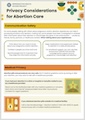
Talking with others about pregnancy and/or abortion experiences can help in processing emotions and decision-making. But, some people have been investigated or arrested after information about their abortion or miscarriage was given to law enforcement–usually by friends, family, partners, or healthcare workers. Use the tips and resources in this guide to protect yourself and your…
Written by Lisa Maldonado, MA, MPH There are more than 2,500 school-based health centers (SBHCs) across the country.1 SBHCs present a vital opportunity to integrate contraceptive care within primary care services for adolescents. These centers are uniquely positioned within the school environment—where students spend a significant portion of their time—to deliver comprehensive primary and preventive…
Written by Crystal Lai, PharmD Candidate 2025 & Regina Ginzburg, Pharm.D., CDCES, BC-ADM Benzodiazepines are a class of medications indicated for generalized anxiety disorder, seizures, and insomnia. These drugs end in “lam or pam,” such as alprazolam, lorazepam, diazepam, or clonazepam.1 Despite their potential to cause serious adverse effects and potential for abuse, 5% of people…
Written by Silpa Srinivasulu, MPH Since it took effect in 2012, the Affordable Care Act (ACA) has mandated that public and most private health insurance plans cover the full range of contraceptive methods (at least one form in each of the 18 method categories) and related services and counseling for people with reproductive capacity without…
The Clinician’s Guide to Disability-Informed Care, created by the National Coalition for Sexual Health, is a resource for clinicians seeking to provide respectful, person-centered physical examinations in sexual and reproductive health settings for patients with intellectual, developmental, and physical disabilities. This guide supports clinicians in delivering compassionate care, fostering patient autonomy, building trust, and tailoring…
Written by Sophie Renaud MD, Frank Jackson DO Severe hemorrhage remains one of the most life-threatening complications after miscarriage and abortion, yet treatment options beyond uterotonics and hysterectomy are limited. The Jada device is currently the only approved vacuum device for uterine hemorrhage, but it was only studied for use in immediate postpartum hemorrhage in…
Written by Marissa Ghant MD, Mark Pearlman MD, Justine Wu MD, MPH Annually, 1 in 6 new breast cancer (BC) diagnoses occur in reproductive-aged individuals.1 Those at risk for unplanned pregnancy should receive contraceptive counseling. Per the Society of Family Planning/Society of Gynecologic Oncology Guidelines2 non-hormonal methods should be first line methods, emergency contraception (including levonorgestrel-containing)…