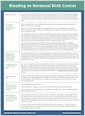
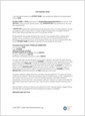
This patient fact sheet explains bleeding on hormonal birth control. It answers questions such as, “How do different types of birth control affect bleeding patterns?” “Do you get a ‘period’ on hormonal birth control?” and more!
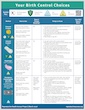
This patient fact sheet compares the different birth control options in a colorful and easy-to-read chart. The fact sheet includes essential information about each birth control method, how to use it, its impact on bleeding/menstruation, and common side effects. Along with updated language, new features include: symbols to quickly determine if a method requires a prescription, protects from STIs/HIVs, or has hormones, a QR code to scan to easily pull up the resource on a smartphone, and hyperlinks attached to each method picture to seamlessly find our method-specific user guides for more in-depth information.
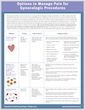
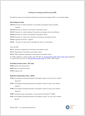
This fact sheet offers patients and clinicians a menu of options to manage pain during gynecologic procedures in an office setting, like IUD placement and removal, cervical or endometrial biopsies, colposcopy, uterine suction (e.g. abortion, miscarriage management), pap smears, and other common gynecologic care. Methods include: comfort options, non-steroidal anti-inflammatory drugs like ibuprofen and naproxen,…
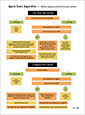
This template by the Clinical Training Center for Sexual and Reproductive Health is intended to support sexual and reproductive health providers in developing or revising site-specific protocols for pain management during intrauterine device placement. A word document version is available to tailor content to your own organization. Link: https://ctcsrh.org/ctcsrh-resource/protocol-template-management-of-pain-for-iuc-placement/
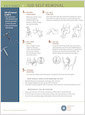
This fact sheet explains the steps someone can take to remove their own IUD at home. The fact sheet includes helpful images. Sources: Update informed by PICCK’s resource, How to Remove Your IUD By Yourself