Written by Alissa Akselrod PharmD Candidate 2025 and Regina Ginzburg Pharm.D., CDCES, BC-ADM In September 2025, the Food and Drug Administration (FDA) issued a warning about the potential link between the use of acetaminophen during pregnancy and the development of autism.1 However, the American College of Obstetricians & Gynecologists (ACOG) and the American Academy of…
Written by Catherine Casado-Pabon, MD Body image and perception of weight gain influence both patients’ and clinicians’ contraception decision-making and counseling. Nearly half of women* using contraception will switch or discontinue their selected contraceptive method within the first year of use.1 While there are many reasons people discontinue or change their contraceptive method as needs…
Written by Julia Ellis-Kahana, MD and Mollie Nisen, MD Effective management of pain during uterine aspiration is critical for patient autonomy, satisfaction and safety.1 A patient’s experience of pain is influenced by a combination of distinct physical, emotional, and social factors. Therefore, a multimodal approach, guided by shared-decision making, and incorporating both nonpharmacologic and pharmacologic…
Written by Angeline Ti, MD, MPH Earlier this month, the World Health Organization (WHO) released the 6th edition of the Medical Eligibility Criteria for Contraceptive Use (MEC) and the 4th edition of the Selected Practice Recommendations for Contraceptive Use (SPR). Clinicians in the US may be familiar with the similarly named guidance, the US MEC…
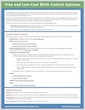
The Affordable Care Act requires public and most private health insurance plans to cover the full range of birth control methods with no out-of-pocket costs. But some people do not have health insurance or have plans that are exempt from birth control coverage. This factsheet lists different resources and programs to help you obtain free or low-cost services so that cost does not have to limit access to your preferred birth control method.
Written by Evan Fu, PharmD Candidate 2025, and Regina Ginzburg, Pharm.D., CDCES, BC-ADM Opioid use has increased dramatically over the last two decades, including among people of reproductive age. The number of pregnant people with opioid use disorder (OUD) presenting to the hospital at labor and delivery quadrupled between 1999 and 2014.1 A recent data analysis…
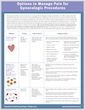
This fact sheet offers patients and clinicians a menu of options to manage pain during gynecologic procedures in an office setting, like IUD placement and removal, cervical or endometrial biopsies, colposcopy, uterine suction (e.g. abortion, miscarriage management), pap smears, and other common gynecologic care. Methods include: comfort options, non-steroidal anti-inflammatory drugs like ibuprofen and naproxen,…